
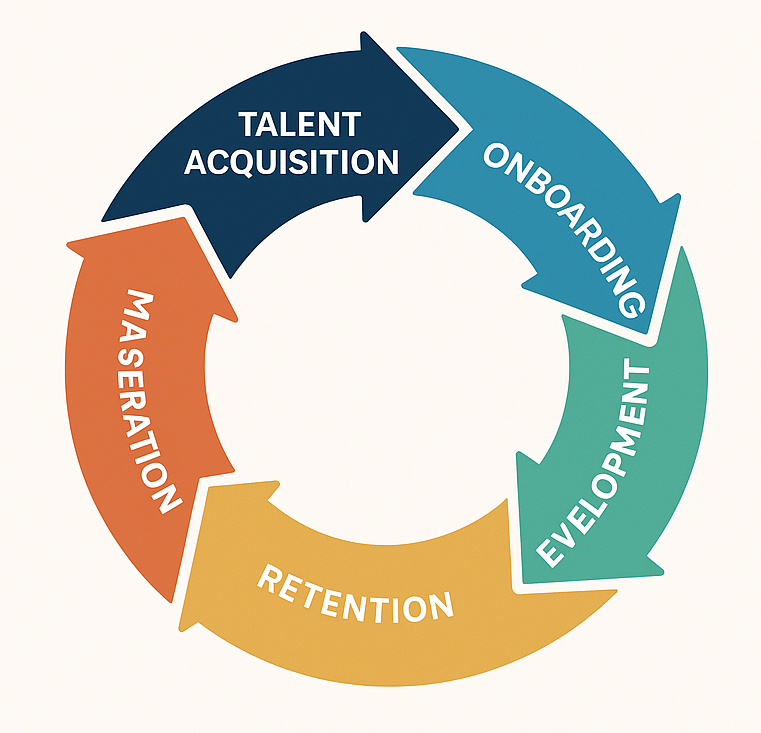
Organizations often invest heavily in attracting top talent but fail to maximize the value of that investment throughout the employee journey. In today’s competitive business environment, talent management extends far beyond recruitment. Companies that consistently outperform competitors understand that every stage of the employee journey contributes to productivity, engagement, innovation, and business growth.
An effective employee lifecycle strategy provides a structured approach to attracting, developing, engaging, and retaining employees. By managing the complete lifecycle rather than focusing solely on hiring, organizations can improve workforce performance, reduce turnover, and build a stronger organizational culture.
As businesses embrace digital transformation, modern workforce strategies increasingly incorporate management consulting practices, change management frameworks, and data-driven decision making to create more effective employee experiences.
Why the Employee Lifecycle Matters More Than Ever
The workforce has changed dramatically over the past decade. Employees expect more than compensation packages and job security. They seek career development opportunities, meaningful work, flexibility, continuous learning, and supportive workplace cultures.
Organizations that manage the employee lifecycle effectively often experience:
- Higher employee engagement
- Lower turnover rates
- Improved productivity
- Stronger employer branding
- Better leadership pipelines
- Greater organizational resilience
Rather than treating HR processes as isolated functions, successful organizations view talent acquisition, development, and retention as interconnected stages of a broader workforce strategy.
The Five Stages of the Employee Lifecycle
The employee lifecycle can be viewed as a continuous journey that begins before an employee joins the organization and continues throughout their career progression.
Stage 1: Talent Acquisition
Talent acquisition is the first interaction potential employees have with an organization. It involves attracting qualified candidates, promoting employer branding, identifying skill requirements, and selecting individuals who align with organizational goals and culture.
Modern recruitment strategies increasingly leverage AI-powered hiring tools, workforce analytics, and digital recruitment platforms to improve candidate sourcing and selection processes.
Organizations often support recruitment initiatives through strategic workforce planning and project management frameworks that align hiring efforts with business objectives.
Stage 2: Onboarding and Integration
The onboarding process significantly influences employee engagement and long-term retention. Effective onboarding extends beyond administrative tasks and focuses on helping employees understand organizational values, expectations, and workflows.
Successful onboarding programs typically include:
- Structured orientation programs
- Role-specific training
- Mentorship opportunities
- Performance expectations
- Technology and process enablement
Organizations that prioritize onboarding often see faster productivity gains and stronger employee satisfaction during the critical first months of employment.
Stage 3: Learning and Development
Continuous learning has become a strategic priority for businesses navigating rapid technological and market changes. Employees who receive ongoing development opportunities are more likely to remain engaged and contribute effectively to organizational goals.
Learning initiatives may include:
- Professional certifications
- Leadership development programs
- Technical training
- Cross-functional learning opportunities
- Digital learning platforms
Organizations increasingly utilize learning management systems and adaptive AI learning platforms to personalize employee development experiences.
Stage 4: Employee Engagement and Performance
Engaged employees are more productive, innovative, and committed to organizational success. Maintaining engagement requires continuous communication, recognition, career growth opportunities, and alignment between employee goals and business objectives.
Organizations can strengthen engagement through:
- Regular performance reviews
- Recognition programs
- Employee feedback systems
- Career progression planning
- Collaborative work environments
Many organizations support performance optimization through process management strategies and workforce analytics initiatives.
Stage 5: Retention and Talent Management
Retention is where the long-term value of employee lifecycle management becomes evident. Organizations that successfully retain top performers reduce recruitment costs, preserve institutional knowledge, and build stronger leadership pipelines.
Effective talent management focuses on:
- Succession planning
- Leadership development
- Internal mobility programs
- Career progression opportunities
- Employee well-being initiatives
Strong talent management frameworks help organizations retain high-potential employees while preparing future leaders.
How Technology Is Transforming Employee Lifecycle Management
Digital transformation is reshaping every stage of the employee lifecycle. Human resource leaders are increasingly adopting advanced technologies to improve workforce planning, employee engagement, and talent development.
Modern workforce strategies often leverage:
- Artificial Intelligence for recruitment screening
- Predictive Analytics for retention forecasting
- Automation Platforms for onboarding workflows
- Digital Learning Systems for continuous development
- Performance Analytics for workforce optimization
Organizations investing in AI-powered business solutions and workflow automation platforms are better positioned to improve employee experiences while reducing administrative complexity.
Common Employee Lifecycle Challenges
Despite recognizing the importance of workforce management, many organizations encounter challenges throughout the employee lifecycle.
- Skills shortages and talent competition
- Employee disengagement
- High turnover rates
- Leadership gaps
- Limited career development opportunities
- Resistance to organizational change
Addressing these challenges requires strategic planning, continuous improvement, and alignment between workforce objectives and broader business goals. Effective change management initiatives can help organizations navigate workforce transformation more successfully.
Building a Future-Ready Workforce Strategy
Organizations that view employees as long-term strategic assets rather than operational resources are more likely to achieve sustainable growth. A comprehensive employee lifecycle strategy enables businesses to attract exceptional talent, accelerate development, improve engagement, and strengthen retention.
As workforce expectations continue to evolve, businesses must embrace modern talent management practices supported by data, technology, and continuous learning. By optimizing every stage of the employee journey, organizations can create resilient, high-performing teams capable of driving innovation and long-term success.
Frequently Asked Questions
What is the employee lifecycle?
The employee lifecycle refers to the complete journey an employee experiences within an organization, from recruitment and onboarding to development, engagement, retention, and eventual exit.
Why is employee lifecycle management important?
It helps organizations improve employee engagement, productivity, retention, and overall workforce performance.
What are the main stages of the employee lifecycle?
The primary stages include talent acquisition, onboarding, learning and development, engagement, performance management, and retention.
How does technology support employee lifecycle management?
Technology enables automation, analytics, AI-powered recruitment, personalized learning, workforce planning, and performance management.
What role does talent management play in employee retention?
Talent management helps identify high-potential employees, support career growth, and create leadership pipelines that encourage long-term retention.
How can organizations improve employee engagement?
Organizations can improve engagement through communication, recognition, learning opportunities, career development programs, and supportive workplace cultures.